- fssai
- nutrition-labels
- exports
- food labelling
- compliance
Automating Nutrition Facts Panels for R&D Teams: A Guide
Learn how to automate nutrition facts panels for global markets. Streamline R&D, ensure compliance, and launch faster with cloud-based labeling tools.
FCOS Team20 min read
Spreadsheets are the single greatest risk factor in your product development lifecycle. While many R&D leads argue that manual entry allows for a "human touch" or granular control over nutritional data, this reliance on static cells and manual math creates a technical debt that becomes unmanageable the moment you scale beyond a single SKU. If you are a solo founder validating a single recipe for a local market, you can perhaps afford the time spent cross-referencing FDA rounding rules by hand. However, if you are an R&D manager at a scaling firm or an agency delivering dozens of formulations for international clients, manual calculation is not a safeguard; it is a bottleneck that ensures your time-to-market will always lag behind competitors who treat compliance as a data problem rather than a clerical one.
This guide settles the debate between expanding your regulatory headcount and automating your nutrition facts panels. By shifting the focus from individual label creation to a centralized data architecture, you can move away from the liability of disparate PDFs and disconnected ingredient specs. We will establish how to transition your workflow into an automated environment where recipe changes instantly update global labeling requirements, allowing your team to focus on formulation rather than formatting. Before you begin this transition, you must have your raw ingredient specifications and your target market regulations ready for ingestion; without these, even the most sophisticated automation will only accelerate the output of inaccurate data.
Key takeaways
- Centralizing raw ingredient data eliminates the version control errors inherent in manual spreadsheets.
- Automated compliance engines can reduce nutrition label turnaround time by up to 90%.
- Multi-market brands must use software that toggles between regional standards like FDA, EU, and FSSAI without re-entering data.
- Internal review cycles are the primary bottleneck; use B2B workspaces to approve labels at launch speed.
Table of contents
- Transforming your R&D workflow from spreadsheets to autopilot
- Centralize your raw ingredient data to eliminate manual entry
- Map your recipe to regional regulatory frameworks
- Leverage cloud-based calculation to reclaim R&D time
- Generate and export market-specific PDF labels
- Establish a B2B review cycle for cross-departmental approval
- Compare manual vs automated labeling workflows
- Scale your product line across global regions
- Avoid the common pitfalls that break automation
- Audit your final labels for launch readiness
- Frequently asked questions
- Choosing Between Manual Compliance and Automated R&D Velocity
Transforming your R&D workflow from spreadsheets to autopilot
Replace manual spreadsheet calculations with an automated labeling system to consolidate fragmented data entry into a centralized workspace. In this environment, the R&D team stops performing manual arithmetic for every recipe iteration. The system pulls from a single source of truth, so every change in an ingredient’s quantity or concentration instantly updates the corresponding nutrition facts panel. This approach eliminates transcription errors and ensures that compliance becomes a natural result of the formulation process rather than a separate, laborious step.
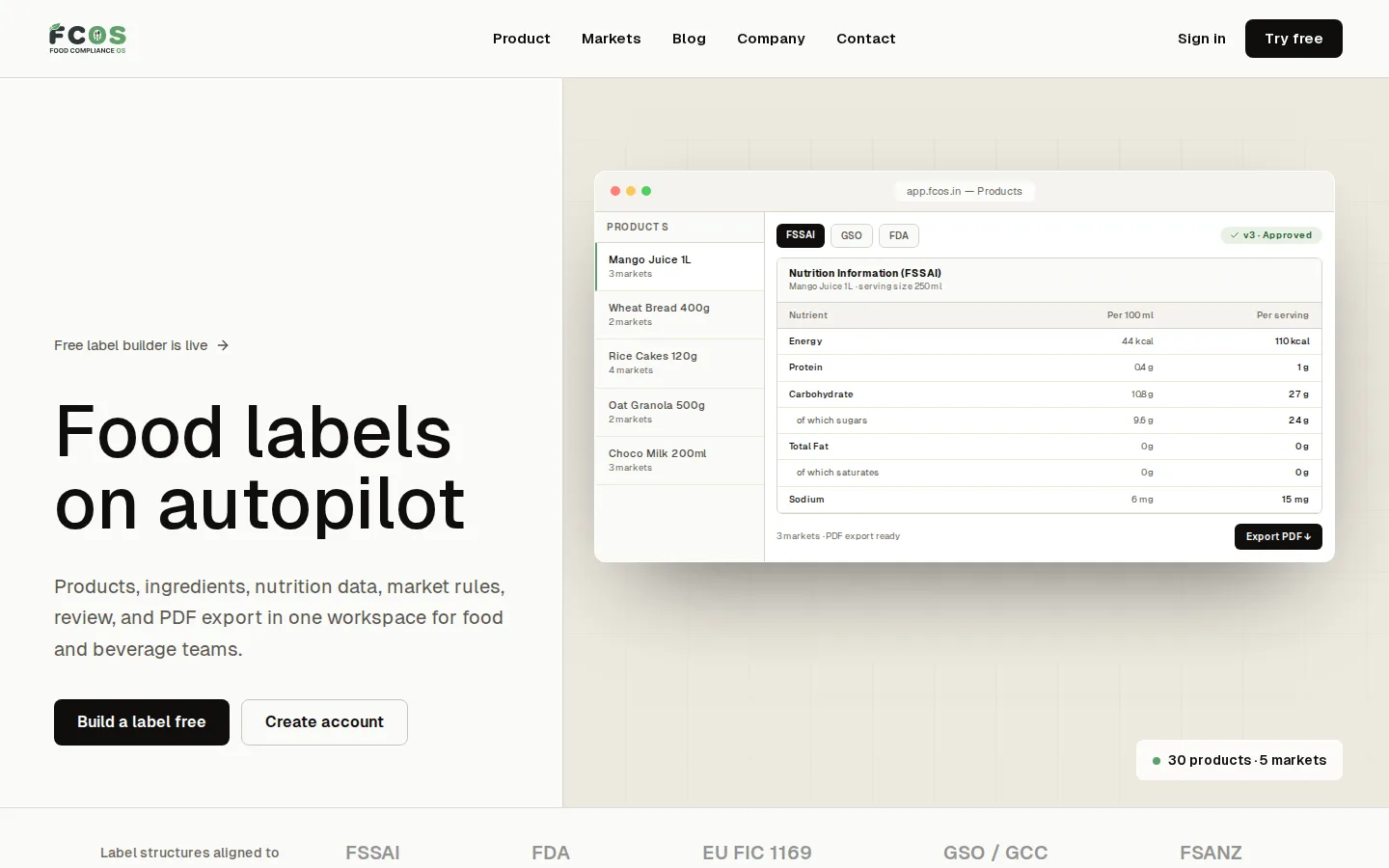
Assemble two critical foundations before you implement this automation. First, finalize and digitize raw ingredient specifications. You must include detailed nutritional breakdowns, including caloric density, macronutrient profiles, and micronutrient values, sourced directly from supplier Certificates of Analysis (COAs) or technical data sheets. Automated output remains unreliable without precise input data.
Second, define the specific regulatory framework for your product. Labels vary significantly between jurisdictions, which affects everything from rounding rules to mandatory nutrient listings. Review nutrition label requirements by market to ensure you configure the software to the correct regional standards before you generate any panels.
Load these specifications and regulatory parameters into your centralized workspace to shift the workflow from calculation to verification. The R&D professional spends their time refining the product profile while the system handles the technical translation of that profile into a compliant, print-ready label. This setup enables rapid prototyping because you can see the regulatory impact of a substituted ingredient in real time.
Centralize your raw ingredient data to eliminate manual entry
Replace the scattered storage methods currently used for ingredient specifications to begin the automation process. Most R&D teams store data in various PDFs, supplier spreadsheets, and internal emails. This decentralized method forces staff to type data manually and increases the risk of errors during formulation. To automate, migrate these assets into a centralized digital database.
Use a digital repository to stop manually entering nutritional values for every new recipe version. By utilizing food formulation and labeling software, which is trusted by over 2,500 brands around the world, R&D teams gain access to a library of over 90,000 raw ingredients. This database includes whole foods, government-provided data, and proprietary supplier ingredients, which provides a comprehensive foundation for new product development.
Centralize ingredient data to make nutritional calculations instantaneous. Instead of recalculating protein, fiber, or sodium counts by hand when a recipe is adjusted, use software that pulls data directly from linked ingredient profiles. This enables rapid recipe scaling and experimentation. If a developer increases a batch size or swaps a single ingredient for a cost-effective alternative, the system updates the entire nutritional profile automatically.
Ensure all team members work from the most current specifications by using a central system. When a supplier updates a specification sheet for a raw material, apply the change once in the database so it reflects across every recipe using that component. Moving from static documents to a dynamic database is the foundational step required to remove manual entry and move toward a fully automated labeling workflow. By establishing this unified data source, R&D teams reduce the time spent on administrative data entry and can focus on the technical aspects of formulation and product optimization.
Map your recipe to regional regulatory frameworks
Configure your software to align with the specific geographic markets where you will sell the product. Select the appropriate regulatory template within the platform settings before you finalize any recipe. Most professional nutrition labeling tools provide pre-configured modules for major jurisdictions, such as the FDA for the United States, FSANZ for Australia and New Zealand, and EU Regulation 1169/2011. Your choice of framework determines how the software calculates daily values, rounds decimal points, and formats the final label.
Use the regional standard as a compliance filter for your ingredient deck. Different jurisdictions mandate different nutrients. For example, the FDA requires added sugars and Vitamin D, while the EU emphasizes energy values in kilojoules and specific salt declarations. The software performs a gap analysis on your raw material data based on these rules. If an ingredient lacks a value for a mandatory nutrient in your chosen region, the system will flag the entry. Monitor the interface for red-line alerts or "incomplete" status indicators. These warnings prevent you from generating a final label until you source the missing data from a supplier or a verified database.
Manage unit conversions and nomenclature through this mapping process. In the United States, fiber is usually a subset of total carbohydrates. In many European frameworks, fiber is a separate calculation. Automated systems perform these mathematical translations internally when the correct regional profile is active. This removes the risk of manual calculation errors when you port a single recipe across multiple global markets.
Verify which regional modules your subscription tier includes and how frequently the vendor provides regulatory updates. Check the vendor’s pricing or features page to confirm the availability of specific international templates and legislative updates, as these modules change to reflect new laws. Set these parameters at the start of the R&D process. This ensures every version of your formulation meets legal requirements and reduces the need for corrections during the transition to production.
Leverage cloud-based calculation to reclaim R&D time
Replace manual spreadsheet tracking with cloud-based calculation engines to eliminate the mathematical bottlenecks inherent in product development. Manual calculation requires R&D teams to account for nutrient density changes caused by moisture loss and yield adjustments for every iteration of a recipe. When a product undergoes thermal processing or dehydration, the total weight decreases while the nutrient concentration increases. Calculating these shifts by hand for each macro- and micronutrient is time-consuming and prone to rounding errors.

Automated software simplifies this by allowing users to input a yield or moisture loss percentage. The system then recalculates the entire nutrition profile across all components of the recipe instantly. This functionality ensures that the final panel reflects the cooked or processed state of the food rather than just the sum of raw ingredients. Because the software applies these factors globally to the formulation, R&D teams can tweak ingredient ratios and see the resulting nutritional impact in real time without restarting the calculation from scratch.
The impact on workflow is significant. Teams using specialized tools like Datacor Nutrition Labeling report an average of 75% time saved per nutrition label when compared to manual spreadsheet methods. This efficiency allows professionals to focus on formulation and sensory testing rather than data entry and arithmetic.
Beyond speed, cloud-based tools provide a higher level of accuracy by pulling ingredient data from verified databases. This mitigates the risk of using outdated or incorrect nutritional values from manual entries. Utilizing platforms from providers with 40+ years of industry experience ensures that the underlying calculation logic adheres to standard industry practices for food and beverage manufacturing. Confirm specific feature availability and database access on the vendor’s current pricing page before procurement.
Generate and export market-specific PDF labels
Convert raw nutrient data into visual assets that meet regulatory requirements by using automation software. Map ingredient databases directly to standardized label templates within the platform. After finalizing a formulation, select the intended market, such as the United States (FDA), Canada (CFIA), or the European Union (EU). The software then applies the correct layout, font sizes, and rounding rules automatically.
Export high-resolution PDF or vector files that are ready for the shelf. These documents adhere to precise millimeter-level specifications required by law. Use vector-based exports to ensure text remains crisp and lines do not blur during scaling by packaging or printing departments. This process removes the need for manual transcription by graphic designers, which prevents the introduction of typographical errors.
Select the layout that fits your packaging dimensions, choosing from standard vertical, tabular, or linear formats. The software automatically applies mandatory bolding, hairline rules, and footnote text according to the current regulations for your region. Use these exported files as verified visual documents because the platforms update to reflect legislative changes. This direct export allows the "Nutrition Facts" or "Nutrition Information" panel to be placed on final artwork without additional intervention from the creative team.
Check the vendor’s current pricing page before selecting a software subscription to confirm which export formats and regional templates are included in specific tiers. Features often vary by plan. Verify the availability of specific regional formats before committing to a workflow, as compliance requirements differ significantly between international markets.
Establish a B2B review cycle for cross-departmental approval
Centralize your nutrition labeling process by moving from fragmented email chains and static spreadsheets into a shared digital workspace. This environment serves as a single source of truth where Research and Development (R&D), Quality Assurance (QA), and Marketing stakeholders view the same label version in real time. Use this structured verification process to ensure that raw data translates accurately into compliant packaging through a coordinated effort.
Begin the cycle by having R&D teams input formulation data and processing parameters, including moisture loss and cook yields, directly into the software. This data should immediately populate a draft Nutrition Facts Panel (NFP) within the shared workspace. Instead of exporting PDFs for review, the R&D team must trigger internal platform notifications to alert the Quality and Regulatory departments that the draft is ready for inspection.
Assign the Quality team to validate these automated outputs against current regional regulations within the platform. They must examine ingredient statements for accuracy, confirm that allergens are properly declared and highlighted, and verify that software rounding rules align with specific market requirements. Use the workspace to leave time-stamped comments or flag specific nutrients for adjustment. This approach eliminates the versioning errors that typically occur when files are saved and shared locally.
Direct the Marketing team to the workspace to manage visual and promotional label elements. They should review the automated panel to identify if the product qualifies for nutrient content claims like "low sodium" or "high fiber." Because the workspace links directly to live formulation data, Marketing can see how recipe changes might disqualify a planned claim. This allows for immediate consultation with R&D before the design is finalized.
Configure the workspace with a linear approval gate system to maintain accountability. Ensure a label cannot proceed to the final export stage until the R&D, Quality, and Marketing leads provide electronic sign-offs within the platform. This creates a permanent audit trail that documents the timing and ownership of every approval. This collaborative architecture prevents the "silo effect." For example, it ensures that if one department swaps an ingredient supplier, the other departments will immediately realize the impact on the final printed packaging. Integrating these teams into a single automated review cycle reduces product launch lead times and minimizes the risk of costly labeling recalls.
Compare manual vs automated labeling workflows
Traditional labeling workflows rely on disconnected spreadsheets where R&D teams manually input ingredient data and calculate nutritional values. This method introduces significant risk because every manual entry or formula adjustment is a potential point of failure. In a spreadsheet-based environment, a single broken cell reference can propagate incorrect nutritional values across an entire product line without triggering an alert.
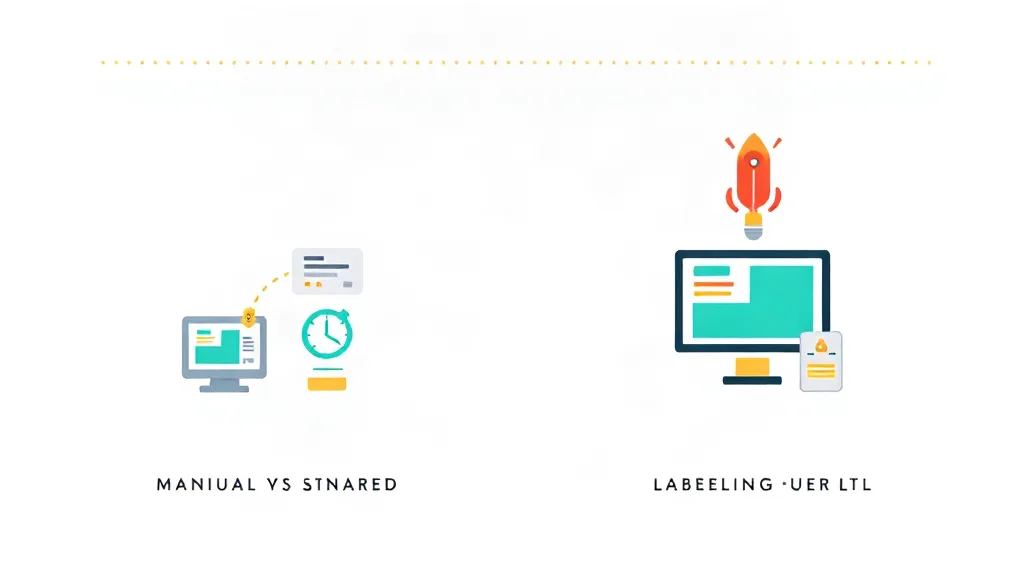
Automated platforms like FCOS shift the responsibility of data integrity from individual memory to centralized logic. Instead of re-calculating values for every recipe iteration, the system pulls from a verified ingredient database. This ensures that when an ingredient profile is updated, every associated nutrition facts panel updates simultaneously. The risk of using legacy data is eliminated because the platform acts as a single source of truth for the entire organization.
| Feature | Manual Spreadsheets | Automated Platforms (FCOS) |
|---|---|---|
| Data Integrity | Prone to copy-paste errors and broken formulas | Centralized database with automated validation |
| Calculation Speed | Requires manual entry and verification for each SKU | Instant calculation based on linked ingredient data |
| Version Control | Dependent on file naming and email history | Full audit trails and real-time synchronization |
| Compliance Updates | Must be manually researched and applied to templates | System-wide updates reflect current regulatory standards |
| Risk Mitigation | Relies on manual QA spot-checks | Built-in logic flags nutritional inconsistencies |
Transitioning to an automated workflow allows R&D teams to focus on formulation rather than data entry. By removing the manual burden, teams reduce the lead time required to move a product from the bench to the shelf. For technical administrators managing system access, the ability to reset your FCOS password ensures that security protocols do not hinder production timelines. Automated systems provide the structural guardrails necessary to maintain accuracy as the volume of SKUs increases.
Scale your product line across global regions
Use a single source of truth for product profiles to avoid overhauling the nutrition labeling process during international expansion. Treat a global launch as one unified workflow rather than a series of separate projects. Use automation platforms to duplicate an existing product profile, including its formulation, ingredient list, and allergen data, and then reassign the target jurisdiction.
Move products from the North American market to the Gulf Cooperation Council (GCC) region by letting the system adjust the visual layout and regulatory logic automatically. The software converts vertical or tabular FDA formats into the bilingual layout requirements of GSO 2233. This removes the need to manually re-calculate values or re-verify mandatory nutrients for the new region.
Consult FDA Nutrition Facts label requirements (USA) + builder to ensure initial compliance for the domestic market. Use that same data set to generate labels for the EU, UK, or Middle East. The software manages underlying conversions, such as switching Calories to kilojoules or adjusting Reference Daily Intakes (RDIs) to match local health authority guidelines.
Reduce transcription errors by avoiding manual data movement between spreadsheets. Maintain one master formulation and apply regional regulatory rulesets. This ensures any change to the core recipe reflects across all global label variants instantly. Scale by selecting a destination instead of performing new rounds of data entry. This method maintains brand integrity and meets compliance deadlines during international rollouts.
Avoid the common pitfalls that break automation
Treat nutrition labeling automation as a transition from manual data entry to algorithmic calculation rather than a one-time setup. The efficiency gains of automating nutrition facts panels for R&D teams only materialize if the underlying logic accounts for the physical and regulatory realities of food production. Failure to address three specific areas, which are moisture loss, regional rounding logic, and data decay, frequently leads to non-compliant labels that require costly post-market corrections.
Account for moisture loss to avoid the most frequent technical oversight in automated systems. When a product undergoes thermal processing, dehydration, or baking, the evaporation of water concentrates the remaining nutrients. If an R&D team calculates a nutrition panel based purely on the raw weight of ingredients without applying a yield factor, the resulting values per serving will be inaccurate. You must input "yield percentages" or "moisture loss" variables at the recipe level within your software. Use advanced automation tools to back-calculate the nutrient density of the finished product based on these loss factors. This ensures that the final panel reflects the food as consumed rather than the food as formulated.
Apply the specific rounding rules mandated by different regulatory bodies to prevent compliance failures. The FDA and the EU have distinct, often conflicting, requirements for how values must be displayed. For example, while standard mathematics might round 4.4 calories to 4, FDA regulations may require it to be rounded to the nearest 5-calorie increment or expressed as zero depending on the specific threshold. Manual rounding is a high-risk activity for R&D professionals who are managing dozens of SKUs. Use automation software to apply localized regulatory logic to the raw analytical data. By selecting the target market within the software, the system adjusts the display values to meet the specific rounding increments and "zero" thresholds required by law.
Maintain the integrity of automated labels by ensuring ingredient specifications remain current. Using outdated spreadsheets or legacy data for raw materials is a primary cause of non-compliance. When a supplier alters a formulation, such as changing a stabilizer or adjusting sodium levels, that change must be reflected across every product using that ingredient. In a manual workflow, this requires a tedious audit of every recipe. To build a robust system, Create your FCOS company account to centralize ingredient data and ensure that any update to a master specification propagates through every linked nutrition panel automatically. This ensures that the R&D team always works from a single source of truth, which eliminates the risk of using incorrect data from discontinued or altered ingredients.
Audit your final labels for launch readiness
Compare the software-generated ingredient statement against the final production batch sheet used in the pilot plant. While automation handles the complex calculations of descending order by weight, R&D teams must verify that sub-ingredients are fully disclosed. These are the components within a compound ingredient, such as the emulsifiers in a fat blend. Confirm that any processing aids that remain in the finished product at functional levels are included, and check that moisture loss calculations have not shifted the order of the primary ingredients.
Validate the allergen declaration manually against the supplier’s technical data sheets. Cross-reference the "Contains" statement generated by the system with the raw material Certificates of Analysis (COA) to ensure no allergens were overlooked during the data entry phase. If the manufacturing environment introduces a risk of cross-contact, review "May Contain" or "Processed in a facility" statements manually to reflect the specific conditions of the production line.
Review the visual formatting of the panel against current regulatory requirements for font height, leading, and specific bolding of allergens. For teams managing multiple product iterations, utilizing Nutrition label software for food & beverage brands streamlines this process by flagging inconsistencies between the master ingredient specifications and the final label output. This final audit acts as the definitive gatekeeper, ensuring that the digital record matches the physical reality of the product before the file is released to the printer or the co-packer.
Frequently asked questions
How do I automate nutrition facts for multiple international markets?
Map your master recipe to a centralized database that applies different regional regulatory schemas to the same set of ingredients. This allows the software to automatically adjust rounding rules, daily value percentages, and nutrient definitions based on the selected jurisdiction. By maintaining one source of data, you eliminate the need to manually re-calculate values for every new export territory.
Can R&D software generate FDA and EU compliant labels from one recipe?
Yes, modern R&D platforms use localized calculation engines to toggle between FDA and EU formatting requirements instantly. The software translates your ingredient data into the specific layout and unit requirements mandated by each governing body, such as kJ versus kcal or specific allergen bolding rules. This ensures that a single product formulation remains compliant across different legal jurisdictions without manual data re-entry.
What is the fastest way to create a shelf-ready nutrition facts panel?
Integrate your raw ingredient specifications directly into a cloud-based calculation tool that generates exportable, print-ready PDF files. This removes the lag time associated with waiting for third-party lab testing results or performing manual spreadsheet cross-referencing. Once the recipe is finalized in the system, it produces a compliant graphic that includes all required disclosures and formatting elements in seconds.
How do I reduce manual errors in food labeling compliance?
Establish a "single source of truth" for ingredient data and automate the transfer of that data directly to the label template. Eliminating the need to copy and paste between spreadsheets and design software prevents common transcription errors and ensures that updates to a raw material reflect across all linked recipes. Setting up automated validation checks further flags missing values or allergen inconsistencies before the label reaches the production stage.
Choosing Between Manual Compliance and Automated R&D Velocity
The transition to automating nutrition facts panels for R&D teams is a strategic shift from administrative maintenance to high-value product development. Before committing to a new workflow, answer these specific questions to determine the appropriate scale for your technical infrastructure:
- Audit data integrity. Determine if your current raw ingredient specifications are stored in a centralized, machine-readable format or trapped in fragmented static documents.
- Calculate labor overhead. Measure the total man-hours your regulatory and R&D staff currently spend on manual data entry and cross-referencing for a single SKU.
- Map regional requirements. Identify the number of distinct international regulatory frameworks your labels must satisfy to support your current and three-year growth targets.
- Identify integration touchpoints. Define whether your labeling output needs to feed directly into an existing ERP, PLM, or project management suite to maintain a single source of truth.
- Evaluate error frequency. Review the historical rate of label revisions and product delays caused by manual calculation mistakes or outdated ingredient data.
FCOS provides the specialized cloud infrastructure required to centralize these data points and automate global compliance workflows. Visit fcos.cloud to schedule a technical walkthrough and see how your R&D team can generate market-ready labels with a single data set.