
- fssai
- nutrition-labels
- exports
- food labelling
- compliance
How Healthcare Marketplaces Standardize Complex Procurement
Learn how healthcare marketplaces aggregate data to streamline procurement and why regulatory compliance is the key differentiator for B2B food brands.
FCOS Team21 min read
The efficiency of a healthcare marketplace is determined entirely by the rigidity of its data schema rather than the breadth of its provider network. Healthcare marketplaces standardize complex procurement by aggregating medical services and insurance products into unified digital interfaces to facilitate comparative shopping. This mechanism involves mapping disparate provider data—often locked in incompatible legacy formats—to a common schema that allows for objective, side-by-side analysis. This model does not hold in highly specialized clinical niches where the nuance of care defies categorization, nor does it apply to government-mandated single-payer systems where the structural lack of competition renders aggregation redundant. You can identify the viability of a marketplace for your specific use case by checking if the platform architecture allows for third-party aggregation or if it requires proprietary silos that isolate your data from the broader market.
The strategy you choose depends on your operational role: an individual practitioner validating a service model needs a low-friction entry point to test market fit, while an agency delivering for enterprise clients requires a centralized "source of truth" to manage multi-region regulatory risk. This article settles the choice between utilizing public exchanges for transparency and building private, controlled environments for secure team collaboration. By analyzing how automated systems like FCOS.cloud map raw data to compliant outputs, you will be able to determine whether to prioritize broad market reach or the deep, localized compliance required for international expansion into markets like the GCC, India, or Australia.
Key takeaways
- Marketplaces succeed by enforcing a common data schema across disparate vendors to enable apples-to-apples comparisons.
- Regulatory compliance acts as the primary barrier to entry, requiring platforms to validate data against regional standards like FDA or EU 1169/2011.
- A central source of truth for product data is essential to avoid the fragmentation that occurs when scaling across multiple international markets.
- Direct procurement is preferable to marketplace browsing when products require high-touch regulatory customization that generic platforms cannot automate.
Table of contents
- Healthcare marketplaces aggregate medical services and insurance products into unified digital interfaces to facilitate comparative shopping.
- Standardized data schemas drive marketplace liquidity
- Regulatory compliance creates the primary barrier to entry
- B2B marketplaces require deeper integration than B2C exchanges
- Public and private exchanges serve different procurement goals
- A central source of truth prevents procurement errors
- International expansion demands multi-region regulatory support
- Marketplace transparency fails without third-party verification
- Direct procurement wins for high-complexity compliance needs
- Audit trails define the next generation of health platforms
- Frequently asked questions
- How do healthcare marketplaces ensure data accuracy across different vendors?
- What is the difference between a public health exchange and a private B2B marketplace?
- How do international regulations like FSSAI or GCC impact marketplace listings?
- When should a company move from a marketplace to a dedicated compliance workspace?
- Deciding Between Internal Control and Marketplace Agility
Healthcare marketplaces aggregate medical services and insurance products into unified digital interfaces to facilitate comparative shopping.
Use healthcare marketplaces to centralize medical services and insurance plans into one searchable environment. This consolidation allows you to compare options side-by-side using the same metrics, which removes the need to log into multiple vendor portals. By standardizing these variables, you turn complex healthcare details into clear information for decision-making.

Standardization relies on mapping data from different providers to a single schema. Marketplaces ingest raw information from various entities, including diagnostic labs, hospital systems, and insurance carriers. They then translate proprietary codes and inconsistent pricing into a universal format. This normalization ensures that terms like "comprehensive metabolic panel" or "high-deductible health plan" mean the same thing regardless of the provider. Without this mapping, comparing services would be too time-consuming and difficult to manage effectively.
Note that this model does not work for every sector. Highly specialized areas, such as experimental oncology or rare disease research, lack the volume or consistent outcomes needed for marketplace aggregation. In these instances, you must handle procurement through individual negotiations. Similarly, government-mandated single-payer systems do not require comparative interfaces because a state authority handles all purchasing.
To determine if a procurement environment supports marketplace standardization, evaluate the architectural flexibility of the platform. A functional marketplace supports third-party aggregation, allowing you to ingest and view data from multiple external sources in one interface. Avoid systems that lock data into proprietary silos or lack external mapping tools. Review the vendor's technical documentation to confirm current integration capabilities and API access levels. FCOS.cloud provides the infrastructure to map these disparate healthcare data sources into standardized schemas, which enables interoperability across your procurement networks.
Standardized data schemas drive marketplace liquidity
A healthcare marketplace functions only as effectively as its underlying data structure. Without a unified schema, procurement becomes a manual exercise in translating disparate vendor specifications, which halts the speed of transactions. Liquidity depends on the ability of a buyer to compare two different products on an identical set of attributes. When data is standardized, the marketplace moves from a simple directory to a functional engine for high-volume trade.
FCOS.cloud applies this logic to the complex field of nutrition data. Procurement in this sector often involves managing raw, unstructured ingredient lists that vary by supplier and region. The platform centralizes this information by mapping raw inputs into a standardized schema. This transformation allows brands to move automatically from raw data entry to the generation of compliant labels. By enforcing a consistent data model at the point of entry, the system ensures that every product listed is searchable, comparable, and ready for regulatory scrutiny.
To verify the effectiveness of these schemas before integrating them into a full procurement workflow, the platform offers a 'free experience' feature. This allows professionals to test how their specific data sets interact with the standardized structure without an immediate financial or technical commitment. Users who have already initiated this process but find themselves locked out of their accounts during the testing phase should reset your FCOS password to maintain continuity in their data mapping.
Standardization removes the friction inherent in manual data reconciliation. When every participant in the marketplace adheres to the same data definitions, the time required to move a product from the manufacturing floor to a compliant listing is significantly reduced. This structural consistency is the prerequisite for scaling procurement operations without increasing administrative headcount.
Regulatory compliance creates the primary barrier to entry
Generic e-commerce platforms operate on a model of high volume and low-friction entry. In those environments, a seller can list a product with little more than a title, an image, and a price. Healthcare and specialized food marketplaces do not have this luxury. Because the products involved directly impact human health, the "friction" of regulatory compliance is not an administrative hurdle to be cleared once; it is a continuous operational requirement for every single SKU.
Marketplaces must move beyond basic product descriptions to rigorous data validation. In the United States, this requires strict adherence to FDA labeling and safety requirements. In the European Union, Regulation (EU) No 1169/2011 dictates how food information is provided to consumers, mandating specific disclosures on allergens, nutritional values, and ingredient origins. If a marketplace allows a product to be listed that fails these standards, it risks massive legal exposure, product recalls, and the loss of institutional trust.
Managing this at scale requires more than a manual review team. To maintain launch speed without compromising safety, marketplaces must implement automated validation systems. FCOS facilitates this by centralizing and automating the verification of product data against these global standards. This ensures that every brand onboarded is "shelf-ready" from the moment of launch. The process eliminates the traditional bottleneck of manual data entry and cross-referencing, allowing marketplaces to expand their catalogs rapidly while remaining compliant. For organizations seeking to optimize their infrastructure, Scaling Global Brands with a Centralized Database for Food provides a framework for managing these complex data requirements.
By shifting compliance from a reactive check to a proactive, automated gatekeeper, marketplaces can focus on procurement strategy rather than regulatory firefighting. This automation ensures that every item in the digital catalog meets the same stringent criteria as those on a physical pharmacy or hospital shelf, providing the necessary assurance for B2B buyers.
B2B marketplaces require deeper integration than B2C exchanges
Consumer-facing insurance exchanges focus on a linear path: search, compare, and purchase. In a B2B healthcare environment, the transaction is rarely the result of a single user’s decision. Procurement involves clinical staff assessing efficacy, supply chain managers evaluating lead times, and finance teams reviewing budget alignment. Consequently, a B2B marketplace cannot function as a simple storefront; it must operate as a collaborative workspace.

These platforms must support team-based review cycles. Instead of a single checkout button, the interface requires features that allow users to flag specific product specifications, share internal notes, and generate PDF exports for offline committee meetings or formal audit trails. This documentation ensures that the rationale behind a high-stakes procurement decision is preserved and accessible across the organization. Without these exportable summaries, the digital marketplace remains siloed from the traditional governance structures that healthcare providers rely on for risk management.
Managing a multi-product portfolio requires a centralized dashboard that aggregates technical data across various categories, from pharmaceuticals to specialized medical devices. The FCOS B2B workspace serves as a model for this level of integration, allowing procurement teams to organize complex data into a single source of truth rather than disparate spreadsheets. Professionals managing these portfolios can sign in to your nutrition label workspace to access tools designed for high-volume, multi-stakeholder review.
Integrating these workspaces into the broader procurement stack moves the marketplace beyond a discovery tool. It becomes the primary engine for standardizing how a healthcare organization evaluates and adopts new products. By providing a shared environment for validation, the marketplace reduces the friction between identifying a need and securing a contract.
Public and private exchanges serve different procurement goals
Select a procurement platform based on the sensitivity of your supply chain and the specific goals of your sourcing project. Use public exchanges as open discovery platforms to maximize price transparency and vendor competition. These are most effective for sourcing commodities or high-volume medical supplies where achieving the lowest unit cost is your primary objective. While these environments allow for rapid benchmarking, be aware that they offer minimal protection for proprietary procurement strategies because pricing and availability are visible to all participants.
Implement a private B2B marketplace when you need to manage complex, multi-layered contracts or protect sensitive data regarding internal consumption patterns. These controlled ecosystems allow you to restrict access to a pre-vetted pool of vendors. This ensures all participants meet your specific regulatory and compliance standards before they can view requirements. Use this approach for specialized medical technology or long-term strategic partnerships. Public disclosure of terms in these instances could undermine your competitive advantage.
Base your choice on whether you require internal team collaboration or broad external market reach. Opt for a private marketplace, such as those built on FCOS.cloud, when procurement involves multiple stakeholders. This includes department heads, clinical leads, and finance officers who require shared access to a single, secure environment to approve requisitions. A public exchange is sufficient if your goal is simple price discovery for non-critical supplies. For specialized healthcare procurement that requires rigorous data privacy and integrated approval workflows, a private B2B infrastructure is the necessary standard.
| Feature | Public Exchanges | Private B2B Marketplaces |
|---|---|---|
| Access Control | Open to all registered buyers and sellers | Restricted to invited and vetted participants |
| Pricing Visibility | Transparent market rates visible to all users | Negotiated, contract-specific rates hidden from the public |
| Data Privacy | Transaction data may be aggregated by the platform | Granular control over who sees procurement volumes and terms |
| Vendor Vetting | General platform-level verification | Strict, buyer-defined credentialing and compliance checks |
| Collaboration | Limited to basic buyer-seller communication | Integrated tools for multi-user internal approvals and roles |
| Customization | Standardized catalogs and checkout flows | Bespoke catalogs tailored to specific organizational needs |
A central source of truth prevents procurement errors
Fragmentation is the primary barrier to scaling healthcare procurement. When product data exists in siloed spreadsheets, localized databases, or disconnected email chains, the risk of manual entry errors increases exponentially. For healthcare marketplaces, these discrepancies do not merely cause administrative delays; they result in incorrect shipments, expired inventory, and failed compliance checks. To scale effectively, procurement teams must move away from disparate data points and consolidate all product information into a single, unified workspace.
Centralizing product data creates a definitive record for every SKU, manufacturer, and certification. This "central source of truth" ensures that every stakeholder, from procurement officers to logistics providers, operates from the same set of validated facts. In complex markets such as the Gulf and GCC regions, where procurement requirements can vary between member states despite regional alignments, centralized data prevents the proliferation of conflicting product specifications. By using a platform like FCOS.cloud, organizations can maintain a master catalog that synchronizes updates across all international storefronts simultaneously.
When a manufacturer updates a product specification or a certification expires, a centralized system allows for a single point of intervention. Instead of updating dozens of local records, the change is made once and reflected everywhere. This approach eliminates the version-control issues that typically plague cross-border procurement. In the GCC market, where rapid infrastructure growth demands high-volume purchasing, the ability to guarantee data integrity across multiple territories allows a marketplace to onboard new suppliers and regions without increasing the margin of error.
Relying on a centralized workspace also facilitates better inventory forecasting and spend analysis. When data is uniform, procurement teams can identify patterns that are invisible in fragmented systems. Standardization ensures that a product code in Riyadh matches the same item in Dubai or Muscat, allowing for true regional oversight. By establishing this foundation, healthcare marketplaces remove the friction of data reconciliation, allowing leadership to focus on expansion rather than error correction.
International expansion demands multi-region regulatory support
Scaling a procurement platform beyond a single jurisdiction requires a shift from simple logistics to regulatory orchestration. When a healthcare or food marketplace moves into new territories, it inherits the burden of local health and safety mandates. These are not merely administrative hurdles; they are hard technical requirements that dictate whether a product can legally sit on a shelf or enter a hospital’s inventory.
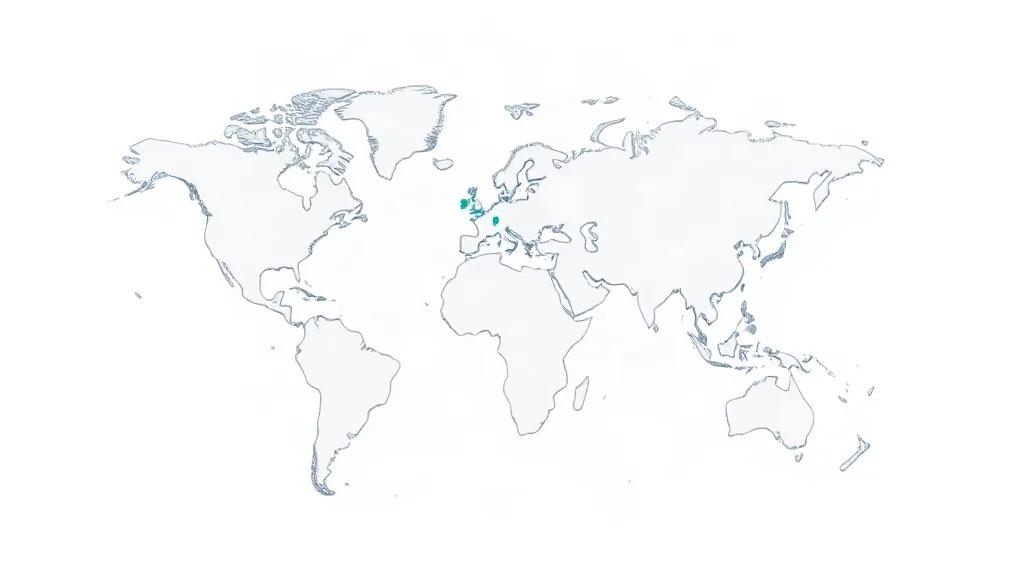
In India, the Food Safety and Standards Authority of India (FSSAI) enforces rigorous standards for packaging, ingredient transparency, and specific logo placements. A brand cannot simply ship Western-labeled products into the Indian market; they must comply with specific font sizes, vegetarian/non-vegetarian markers, and precise nutritional declarations. For technical implementation, procurement teams must utilize resources like the FSSAI nutrition label requirements (India) + label builder to ensure every SKU meets the exact specifications required for customs clearance and local retail.
Similarly, Food Standards Australia New Zealand (FSANZ) operates under a distinct Code that governs everything from health claims to allergen declarations. A marketplace that fails to account for these differences forces its users into manual verification, which introduces human error and slows down the supply chain. To be viable for global brands, a marketplace must embed these regional requirements into the core procurement flow.
A standardized marketplace must act as a filter that prevents non-compliant products from entering the pipeline of a specific region. If the system cannot distinguish between the labeling needs of a product destined for Sydney versus one headed for Mumbai, the risk of shipment seizure or legal penalties falls on the buyer and the brand.
Platforms like FCOS.cloud provide the infrastructure to bridge these gaps by integrating regional regulatory logic directly into the product information management layer. This ensures that compliance is a prerequisite for a transaction rather than a post-purchase correction. By automating the alignment of product data with local laws, marketplaces allow global brands to scale into diverse markets without the overhead of building localized compliance teams for every new territory.
Marketplace transparency fails without third-party verification
Healthcare marketplaces often suffer from a data integrity gap where the speed of onboarding outpaces the rigor of verification. When vendors are permitted to self-attest to their credentials, the platform risks becoming a repository of "garbage in, garbage out." In this environment, transparency is an illusion; without an independent layer of validation, a marketplace is merely a directory of unverified claims, shifting the entire burden of due diligence back onto the buyer.
To solve this, marketplaces must implement automated compliance checks that function as a "nutrition label" for every service and product listed. A buyer should be able to view a standardized summary of a vendor’s regulatory standing, insurance coverage, and operational certifications at a glance, without digging through disparate documents or external databases. For organizations operating across different jurisdictions, understanding Nutrition label requirements by market is the first step toward implementing these automated safeguards.
These labels must be dynamic rather than static. A vendor who was compliant at the time of onboarding may lose a certification or let an insurance policy lapse months later. Data integrity requires a system that monitors these attributes in real-time, flagging or delisting vendors the moment they fall out of compliance.
FCOS provides the framework for this through the concept of "food labels on autopilot." By automating the verification process, the marketplace ensures that every data point on a listing is backed by third-party evidence. This removes the manual labor of verification from the procurement team and replaces it with a persistent, programmatic trust layer. When the underlying data is verified by default, the marketplace transitions from a simple lead-generation tool to a robust procurement engine capable of supporting high-stakes healthcare decisions.
Direct procurement wins for high-complexity compliance needs
General healthcare marketplaces excel at aggregating commodity goods, such as basic PPE or office supplies, where the primary variables are price and delivery time. However, the marketplace model reaches a functional limit when procurement involves highly regulated products that require specific labeling, chemical disclosures, or regional compliance certifications. For these items, relying on a broad marketplace interface often leads to data fragmentation and increased regulatory risk.
Brands shipping complex healthcare products must shift from general procurement channels to dedicated label management platforms. A specialized system like FCOS.cloud allows a company to maintain a single source of truth for every piece of packaging and instructional insert, rather than managing disparate files across multiple vendor portals. This direct approach eliminates the lag inherent in marketplace updates, where a change in a regulatory warning might take days to propagate through a third-party system.
Launch speed is the primary operational advantage of this transition. When a product requires a new compliance label to enter a specific territory, a dedicated platform uses standardized templates to generate approved assets instantly. This removes the manual back-and-forth between design teams and procurement officers that typically stalls marketplace listings.
Furthermore, high-complexity procurement requires robust team review features that general marketplaces lack. Dedicated software allows regulatory, legal, and medical affairs teams to review and approve labels within the same environment where the procurement data lives. By integrating the approval workflow directly into the management platform, organizations ensure that no product reaches a distribution channel without having every compliance check verified by the necessary stakeholders. This level of granular control is essential for maintaining safety standards while scaling operations across diverse regulatory environments.
Audit trails define the next generation of health platforms
Replace static product listings with dynamic, immutable ledgers that record every procurement action. Use audit trails as the primary mechanism for operational integrity rather than a secondary reporting feature. Administrators should use these trails to track every modification to a product specification, pricing tier, or vendor certification back to a specific user and timestamp.
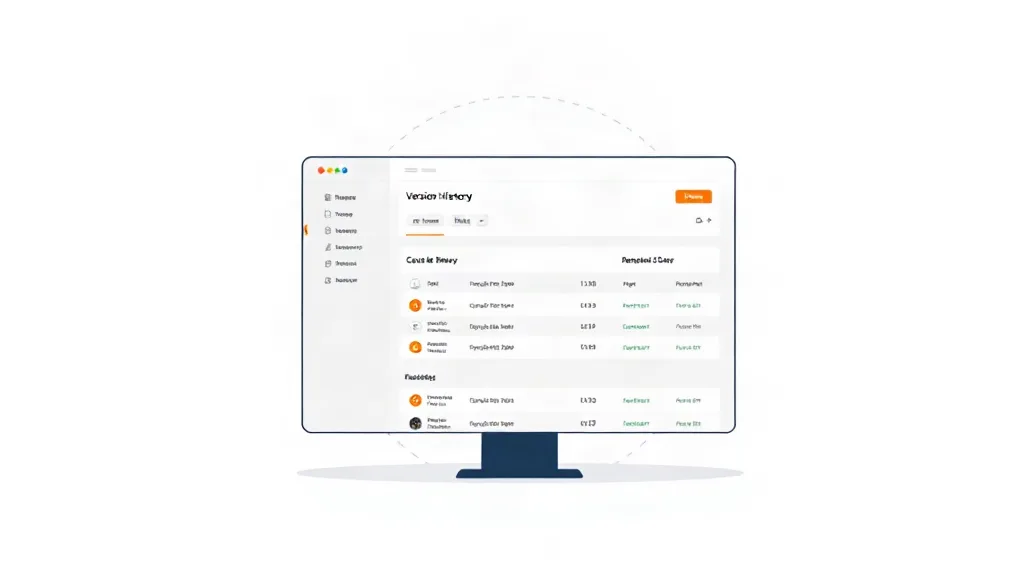
Implement comprehensive version control to reconstruct the exact state of the marketplace at any point in history. This is necessary when discrepancies arise in clinical settings or supply chain audits. Manage team reviews within the platform so that stakeholders, including clinical leads and legal counsel, provide documented sign-offs in one place. Centralizing these interactions eliminates fragmented email threads and spreadsheets. This creates a unified record that remains intact despite personnel turnover or organizational restructuring.
Maintain a detailed history of all exports. When moving data from the procurement platform into third-party logistics or accounting software, the trail must show the specific data exported, the user responsible, and the timestamp. This transparency prevents errors caused by manual updates made outside the core system. FCOS.cloud uses these foundational features to ensure that the critical safety and compliance requirements of healthcare and food supply chains are met through technical rigor instead of manual oversight.
Adopt these tracking standards immediately to ensure the long-term viability of the marketplace. Verifying the provenance of every change is now a minimum requirement for regulators and institutional buyers. Whether managing medical devices or perishable food supplies, successful platforms must provide a complete, unalterable narrative of the procurement lifecycle. Ensure every decision is backed by a visible history of accountability.
Frequently asked questions
How do healthcare marketplaces ensure data accuracy across different vendors?
Marketplaces enforce data accuracy by implementing rigid schema validation and automated mapping tools that normalize disparate vendor inputs into a single, unified format. This process is supplemented by third-party verification services that cross-reference product certifications against global regulatory databases to confirm authenticity. Utilizing a centralized platform like FCOS.cloud allows operators to automate these validation workflows, ensuring that procurement data remains synchronized and error-free across the entire supply chain.
What is the difference between a public health exchange and a private B2B marketplace?
Public health exchanges focus on individual coverage and consumer accessibility, whereas private B2B marketplaces are engineered for high-volume procurement and complex organizational logistics. Private exchanges offer deeper API integrations for existing ERP systems and support custom negotiated pricing structures that are generally unavailable on public-facing platforms. The primary distinction lies in the depth of the audit trail and the technical infrastructure required to support institutional compliance.
How do international regulations like FSSAI or GCC impact marketplace listings?
International regulations like FSSAI in India or GCC standards in the Middle East dictate specific labeling, ingredient disclosure, and certification metadata that must be validated before a listing is visible to buyers. Marketplaces must maintain region-specific validation logic to automatically filter out products that do not meet the local legal requirements of the shipping destination. Failure to localize these compliance checks can result in the immediate seizure of goods and the loss of operating licenses in those jurisdictions.
When should a company move from a marketplace to a dedicated compliance workspace?
Transition to a dedicated compliance workspace when your procurement volume requires granular control over multi-region regulatory documents that exceed the basic verification provided by a general marketplace. A dedicated workspace allows for the management of proprietary audit trails and direct communication with regulatory bodies, eliminating the data silos inherent in third-party platforms. This move is essential for organizations scaling into highly regulated markets where a centralized source of truth is the only way to mitigate significant legal risk.
Deciding Between Internal Control and Marketplace Agility
The move toward standardized healthcare procurement requires balancing the immediate need for liquidity with the long-term necessity of regulatory rigor. Before committing to a specific marketplace architecture or internal procurement upgrade, execute the following evaluation process to determine your organizational readiness:
- Audit data readiness, determining if your current product schemas can map to standardized marketplace fields without manual intervention.
- Quantify compliance overhead, calculating the total administrative cost of maintaining multi-region regulatory alignment through internal teams.
- Map integration requirements, identifying whether your procurement workflow demands deep API connectivity or can function via standalone exchange portals.
- Define verification needs, establishing the level of third-party data validation required to satisfy your specific risk management protocols.
- Analyze scaling friction, estimating the long-term technical debt of maintaining custom procurement logic against the efficiency of a unified digital interface.
The transition to a standardized procurement model requires a central source of truth that bridges the gap between raw medical data and regulatory demands. FCOS provides the underlying infrastructure to unify these complex healthcare data flows into a single, compliant interface. Explore how to automate your procurement standards at https://fcos.cloud/.