- fssai
- nutrition-labels
- exports
- food labelling
- compliance
UAE Nutrition Label Requirements + Label Builder Guide
Master UAE food labeling compliance. Learn mandatory requirements, date formatting rules, and how to use a label builder for GCC market entry.
FCOS Team20 min read
You should never hire a regulatory consultant to draft your UAE nutrition labels until you have already attempted to automate the process through a dedicated builder. While traditionalists argue that the complexity of Gulf Standardization Organization (GSO) regulations requires a human specialist, the reality is that GSO compliance is a logic-based data entry task that is often more accurately handled by software. For a founder launching a single product into Dubai’s retail market, the cost of manual consulting is an unnecessary barrier to entry that delays time-to-market. Conversely, for a CPG agency managing export portfolios across the GCC, relying on manual translation and manual formatting is a liability that invites rejection from local municipalities during the registration process.
This guide settles the decision between maintaining internal spreadsheets and adopting a centralized label builder for UAE market entry. It details the non-negotiable bilingual requirements, the 90-day shelf-life threshold that dictates your date format, and the specific GSO 9 allergen typography that frequently causes shipment delays at the border. By following this workflow, you will be able to determine whether your current labeling process is a scalable asset or a bottleneck preventing your products from hitting UAE shelves at launch speed.
Key takeaways
- UAE food labels must strictly follow GSO standards, requiring bilingual (Arabic/English) text and specific nutrient declarations.
- Date formatting is determined by shelf life: products under 3 months require Day/Month/Year, while longer-life items allow Month/Year.
- Automated label builders like FCOS eliminate manual translation and formatting errors, accelerating time-to-market for GCC exports.
- Non-compliance results in costly shipment rejections at UAE ports of entry, making pre-launch validation essential.
Table of contents
- UAE food labels require GSO compliance and bilingual formatting
- Shelf life dictates your mandatory expiration date format
- Mandatory nutrients must appear in a standardized GCC grid
- Bilingual labeling is a non-negotiable entry requirement
- Automate compliance with a dedicated UAE label builder
- Centralize multi-market data to prevent version control errors
- Verify allergen declarations against GSO 9 standards
- Transition from recipe data to PDF export in minutes
- Compare UAE requirements with other global standards
- Frequently asked questions
- Choose Between Manual Compliance or Automated Scaling
UAE food labels require GSO compliance and bilingual formatting
Follow Gulf Standardization Organization (GSO) technical regulations for all food products sold in the United Arab Emirates. These standards create a unified framework for food safety and consumer information across GCC member states. You must comply with these formatting and disclosure rules to avoid product rejection at the border or removal from retail shelves.
Print all mandatory information in both Arabic and English. While you may include other languages, the Arabic text must be clear, legible, and an accurate translation of the English content. This allows the diverse UAE demographic to access health and safety information. Refer to the labeling/marking requirements for the UAE in the Country Commercial Guide for the latest regulatory updates.
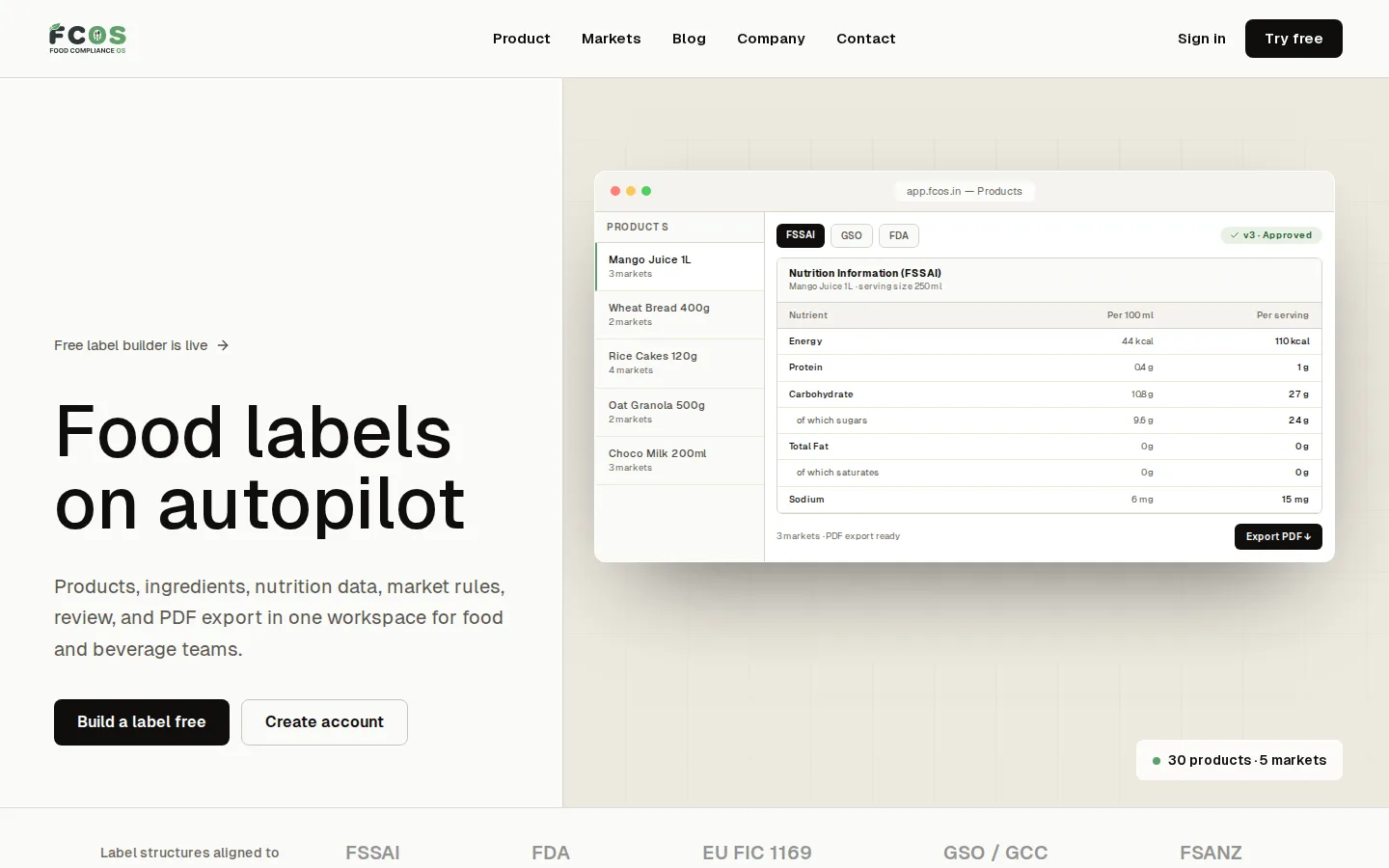
Include a nutrition facts panel that lists specific mandatory nutrients. You must disclose energy value (calories), total fat, saturated fat, trans fat, cholesterol, sodium, total carbohydrates, dietary fiber, total sugars, and protein. Calculate these values per 100g or 100ml. You should also include values per serving size to ensure transparency. Use a tool designed for GCC nutrition label requirements (GSO) + label builder to automate the layout and ensure data fields meet current Gulf standards.
Check if your product qualifies for labeling exemptions based on its physical characteristics or processing state. Small packages with a total surface area under 100 square centimeters do not require a full nutrition facts table if they make no nutritional or health claims. Raw ingredients that are not processed or fortified are also generally exempt. This category includes fresh produce, raw meat, and plain coffee or tea. Verify current surface area thresholds and processing definitions with local authorities because these criteria undergo periodic regulatory review.
Shelf life dictates your mandatory expiration date format
Manufacturers must determine the specific stability of a product before finalizing packaging artwork, as the UAE enforces different date marking sequences based on the duration of the product's shelf life. The regulatory threshold is three months (90 days). Calculating whether a product’s stability falls above or below this duration dictates whether a full calendar date is mandatory or if a simplified month and year format is permissible.
For products with a short-term shelf life, defined as three months or less from the date of manufacture, the expiration date must follow a strict Day/Month/Year sequence. This granular level of detail is required to ensure consumer safety for highly perishable items. According to the United Arab Emirates - Labeling/Marking Requirements, this specific order is non-negotiable for these products.
Products designed for long-term storage that remain stable for more than three months have more flexibility in their labeling. These items may continue to use the Day/Month/Year format, or they may opt for a Month/Year format. The United Arab Emirates - Labeling/Marking Requirements confirm that both options are compliant once the 90-day threshold is exceeded.
When applying these dates to the label, the information must be clear, easy to read, and printed in a way that is difficult to erase. While the dates are typically printed on the outer packaging, they must be visible to the consumer at the point of purchase without needing to open the product.
The following table summarizes the required formats based on product stability:
| Shelf Life Duration | Required Date Format | Example |
|---|---|---|
| Three (3) months or less | Day / Month / Year | 01/05/2024 |
| More than three (3) months | Day / Month / Year OR Month / Year | 01/05/2024 or May 2024 |
Failure to adhere to these specific sequences can result in shipments being rejected at the port of entry or removed from retail shelves during inspections by the relevant municipal authorities. Manufacturers should verify their stability testing data against these requirements before proceeding to the nutrition grid layout.
Mandatory nutrients must appear in a standardized GCC grid
Follow UAE food labeling regulations by implementing a standardized nutrition information table. You must align this grid with GSO 2233 and the standards defined by the Emirates Authority for Standardization and Metrology (ESMA). Use the specific tabular format required for all prepackaged food products intended for retail. This layout ensures consumers can compare products easily at the point of sale.
Include the following core nutrients in your declaration. List the energy value at the top, followed by the macronutrient breakdown:
- Energy Value: Express this in both kilocalories (kcal) and kilojoules (kJ).
- Total Fat: Include a specific breakdown of Saturated Fat and Trans Fat.
- Cholesterol: Measure this in milligrams (mg).
- Sodium: Measure this in milligrams (mg).
- Total Carbohydrates: Include a sub-declaration for Dietary Fiber and Total Sugars.
- Protein: Measure this in grams (g).
Standardize all units of measurement per 100g or 100ml of the product. You may provide additional values per serving, but the 100g or 100ml measurement is the primary regulatory requirement. State all weight-based nutrients, including fats, carbohydrates, and proteins, in grams (g).
Ensure all figures are accurate. UAE authorities conduct periodic laboratory testing to verify that the physical contents of the package match the printed label. Any discrepancies can result in shipment rejections at the port of entry or mandatory recalls from retail shelves.
Use FCOS as a centralized data hub to manage GCC data points alongside EU or US requirements. This tool stores master product specifications and generates region-specific labels. It automatically adjusts units, such as the mandatory inclusion of kilojoules alongside kilocalories, based on the destination market. If you are locked out of your compliance dashboard, Reset your FCOS password to regain access to your localized label templates. Centralizing this data ensures that you can push updates across the entire product catalog simultaneously when GCC regulations change, which reduces the risk of manual entry errors in the nutrition grid.
Bilingual labeling is a non-negotiable entry requirement
Under UAE Cabinet Resolutions and guidelines set by the Ministry of Industry and Advanced Technology (MoIAT), every food product entering the market must display all mandatory information in Arabic. This requirement is a strict regulatory hurdle at the point of entry. While English is the standard secondary language for international brands, the Arabic text must be present, legible, and accurate. Manufacturers can achieve compliance either by integrating Arabic directly into the original packaging design or by applying a permanent, tamper-evident sticker before the product reaches the retail shelf.
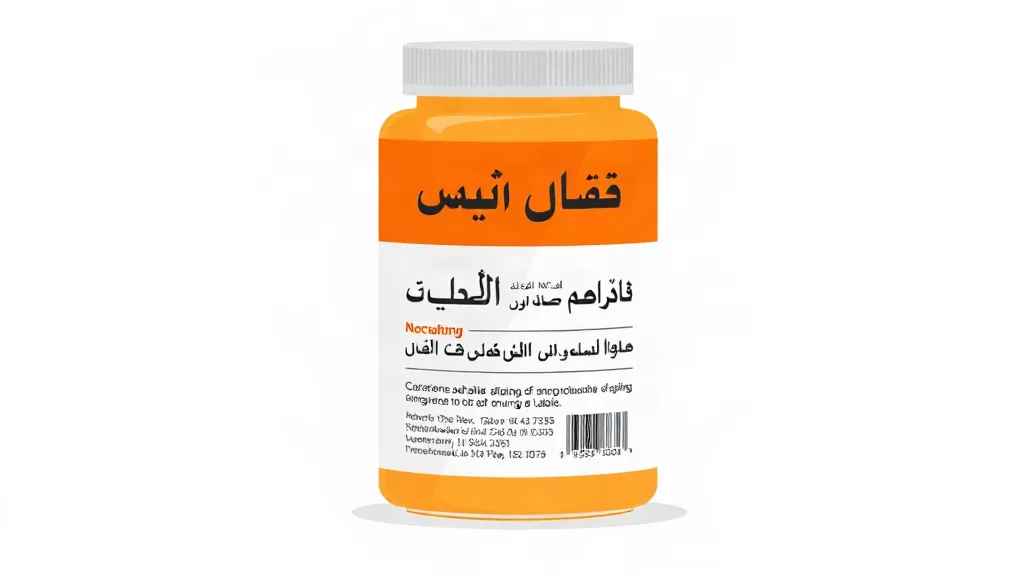
The primary risk in bilingual labeling lies in the translation of technical nutrition terminology. General-purpose translation software often fails to capture the precise legal terms required by the Gulf Standardization Organization (GSO). Specific terms for components like "saturated fats," "dietary fiber," or "energy value" have standardized Arabic equivalents that must be used exactly to avoid misinterpretation. A literal translation that deviates from the accepted nomenclature can result in a shipment being flagged as non-compliant during customs inspection, leading to costly delays or total rejection of the batch.
Furthermore, the layout must ensure that the Arabic and English information are equivalent in meaning and prominence. If a specific health claim or allergen warning is present in English, it must be mirrored exactly in Arabic. Inconsistency between the two languages is a frequent cause for regulatory friction and product recalls. For teams managing complex portfolios, maintaining a library of pre-verified, GSO-compliant translations is essential to prevent manual errors during the label design phase. Sign in to your nutrition label workspace to access verified translation strings that align with current UAE standards.
If using over-stickers, the label must be applied in a way that does not obscure other mandatory information, such as the production and expiry dates. The adhesive must be permanent enough to withstand the humidity and temperature fluctuations common in Middle Eastern logistics chains. A label that peels off or becomes illegible during transit renders the product legally unsellable, regardless of the accuracy of the data originally printed on it.
Automate compliance with a dedicated UAE label builder
Use the FCOS platform to bypass manual cross-referencing of GSO 2233/2021 standards. This engine generates shelf-ready labels immediately, avoiding the supply chain bottlenecks often caused by Emirates Authority for Standardization and Metrology (ESMA) and Ministry of Industry and Advanced Technology (MoIAT) mandates. Manual creation risks border rejections, but automation provides a direct path to compliance.
Input product specifications into the structured interface to bridge the gap between raw data and finalized packaging. The system applies regional logic to translate nutrients and calculate daily values automatically. This process ensures the final label adheres to UAE layout, font size, and language requirements without requiring multiple design iterations.
Test the tool's utility through the "free experience" feature before changing your workflow. Access the UAE nutrition label requirements + label builder in a browser to input data and toggle formats without an account or credit card. Use the live preview to verify that product data aligns with UAE standards before starting production. This immediate feedback allows teams to validate data accuracy early in the procurement phase.
Generate a high-resolution, vector-ready file once data entry is complete. This file is formatted for direct placement onto packaging designs. It maintains technical specifications, including the bolding of specific fats and the placement of the energy value. Shifting to this logic-based builder reduces regulatory revision time and accelerates product placement on shelves.
Select a subscription tier based on SKU volume and organizational requirements. Available plans include bulk data uploads, team collaboration tools, and storage for historical labels. Check the FCOS pricing page for current costs and specific inclusions, as these are updated to reflect new regulatory features. The platform centrally updates the label generator logic as UAE regulations evolve, which removes the need for individual legislative monitoring.
Centralize multi-market data to prevent version control errors
CPG teams operating across the Gulf Cooperation Council (GCC) must move beyond manual spreadsheets to manage the complexities of regional nutrition labeling. While the UAE and Saudi Arabia share common foundations through GSO standards, maintaining separate Excel files for each market creates a high risk of version control failure. A single formula change or a revised laboratory analysis often fails to propagate across every localized file, leading to non-compliant packaging entering the supply chain.
Transitioning to a centralized B2B workspace establishes a single source of truth for all product specifications. Instead of managing static documents, teams input core nutritional data once into a unified hub. This data then populates specific label templates for the UAE (MoIAT) and Saudi Arabia (SFDA) automatically. This "autopilot" approach ensures that if a technical director updates a protein value or a sodium count in the master file, the change reflects instantly across all regional label variants.
A centralized system eliminates the "silo effect" where marketing, regulatory, and production teams work from different versions of a label. In a manual environment, the time lag between a regulatory update and a label revision can result in costly product recalls or re-labeling at the port of entry. By contrast, a digital workspace tracks every modification, providing a timestamped audit trail that proves compliance during inspections.
For CPG teams, the primary benefit is the reduction of manual data entry. Most errors in UAE nutrition labeling occur during the transcription of data from lab reports into design software. A centralized builder allows for the direct mapping of data points to the required layout, maintaining the integrity of the information from the source to the final print-ready file. This structure allows teams to scale their product portfolios across the GCC without a linear increase in administrative overhead.
When selecting a digital workspace or label builder, teams should verify the platform’s current feature set and integration capabilities on the vendor’s official pricing or product page to ensure it supports the specific regional exports required. Centralization transforms labeling from a repetitive manual task into a managed workflow, protecting the brand from the logistical and financial consequences of data inconsistency.
Verify allergen declarations against GSO 9 standards
List all ingredients known to cause hypersensitivity as required by GSO 9. The mandatory list includes cereals containing gluten such as wheat, rye, barley, and oats. You must also declare crustaceans, eggs, fish, peanuts, soybeans, milk and dairy products including lactose, nuts, celery, mustard, sesame seeds, and sulfur dioxide or sulfites when present in concentrations exceeding 10 mg/kg.
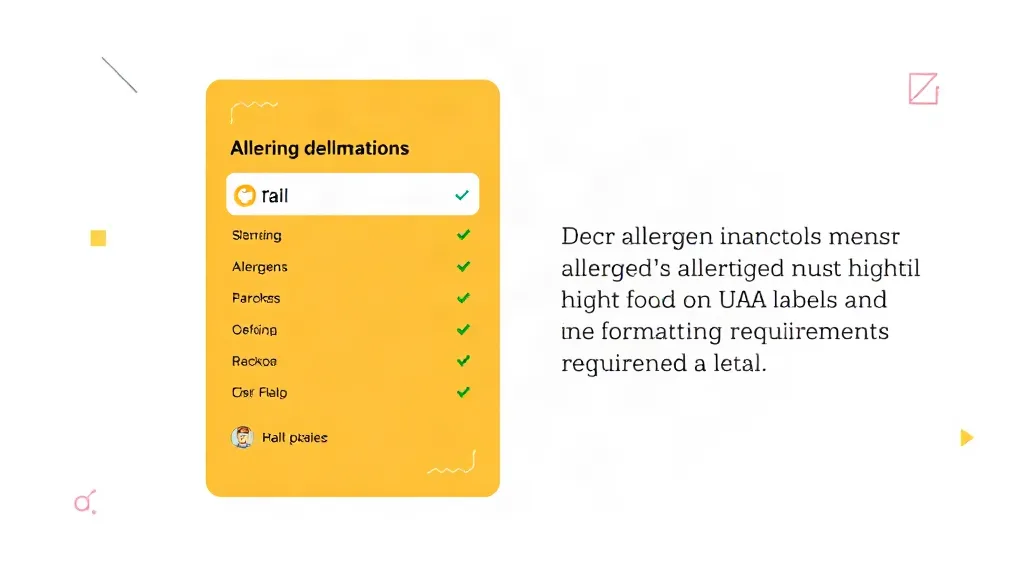
Distinguish these allergens from the general ingredient list through clear typographical contrast. Bold the allergen name within the ingredient list or position a separate "Contains" statement immediately following the list. If you use a separate statement, it must encompass all allergens present, regardless of whether they were already identified in the main list.
Apply these rules specifically to Arabic typography for the UAE market. When bolding allergens in Arabic script, choose a typeface that maintains legibility without compromising the integrity of the characters. Because Arabic is a cursive script, excessive bolding in certain fonts can cause the loops of letters, including 'و' (waw) or 'م' (meem), to fill in. This renders the text unreadable to consumers and regulatory inspectors. Translate the "Contains" statement as "يحتوي على" and format it with the same level of prominence as the English equivalent.
Use precautionary labeling, such as "May contain" (قد يحتوي على), for potential cross-contamination. While this is not always mandatory if the risk is negligible, any included statement must follow the same formatting and language requirements as mandatory declarations.
Select a label builder that supports independent character styling for both Latin and Arabic scripts within a single text field. This prevents the bolding of English terms from causing alignment or rendering errors in the corresponding Arabic text. Verify the software’s Right-to-Left (RTL) text rendering and font support on the vendor’s official product page to ensure the final PDF or print file adheres to GSO legibility standards.
Transition from recipe data to PDF export in minutes
Founders moving toward a product launch require a workflow that converts raw recipe data into a market-ready label without the delays of manual calculation or third-party laboratory wait times. A digital label builder automates the translation of ingredients into a standardized nutrition facts panel by drawing from verified nutritional databases.
The process begins with the input of a precise recipe. The user enters each ingredient and its corresponding weight. The software aggregates the macro and micronutrient data, accounting for processing losses or moisture changes where applicable. This stage eliminates the need for independent chemical analysis for most standard food products, allowing for immediate iteration if a recipe needs adjustment to meet specific nutritional claims or health goals.
Once the recipe is finalized, the user selects the UAE/GCC regional setting within the tool. This step is critical because it applies the specific formatting rules mandated by the Emirates Authority for Standardization and Metrology (ESMA) and the Ministry of Industry and Advanced Technology (MoIAT). The software automatically adjusts the layout to include required fields such as energy values in kilocalories, fat breakdowns, and sodium content, ensuring the visual hierarchy complies with Gulf Standard (GSO) 9/2013.
The final stage is the generation of a high-resolution PDF export. This file is formatted for immediate use by packaging designers or commercial printers. By automating the transition from ingredient list to compliant graphic, a founder can move from a kitchen prototype to a retail-ready packaging design in a single session. This speed is essential for maintaining momentum during the final weeks before a product hits the shelves in the UAE market. Always verify specific software subscription tiers and export features on the provider’s current pricing page to ensure the chosen plan supports GCC-specific templates.
Compare UAE requirements with other global standards
Audit your existing packaging against Emirates Authority for Standardization and Metrology (ESMA) and Gulf Cooperation Council (GCC) standards before shipping to the United Arab Emirates. Do not assume that labels compliant with United States Food and Drug Administration (FDA) or European Union (EU) regulations will pass inspection. The UAE follows a specific framework, primarily GSO 2233, which requires distinct formatting, unit measurements, and nutrient disclosures. Failure to adapt these elements often results in shipment rejections at the border.
Convert your nutritional data to a per 100g or 100ml basis to meet UAE and GCC requirements. This differs from the FDA approach, which relies on "Nutrition Facts" based on Reference Amounts Customarily Consumed (RACC) per serving size. While this 100g metric aligns with EU practices, American brands must add these values to avoid compliance failures. Additionally, ensure trans fats are disclosed on the label. The UAE enforces strict trans fat labeling, whereas other international markets may treat this as voluntary or manage it through ingredient restrictions.
Incorporate Arabic translations for all mandatory food information to comply with UAE law. Standard labels designed for the UK or US markets lack the linguistic requirements and the specific layout mandated by GSO 9. Most exporters use bilingual labels in both Arabic and English to satisfy these rules. To identify specific gaps in your current packaging, review the Nutrition label requirements by market for a detailed breakdown of regional variances.
Utilize a market-specific label builder to automate the transition between different regulatory systems. These tools handle the conversion between United States Daily Value (DV) percentages and the Nutrient Reference Values (NRV) used in the Middle East. The UAE maintains unique rounding rules and visual hierarchies that differ from the FDA’s specific font sizes and bolded calorie counts. Avoid using a single design for all global markets, as UAE inspectors require a specific nutrient list order and formatting structure.
Frequently asked questions
What are the requirements for food labeling in the UAE?
Food labeling in the UAE must comply with the Gulf Standardization Organization (GSO) standards, specifically GSO 9/2013 and GSO 2233. You must provide all information in Arabic, either as part of the original packaging or via a permanent sticker. The Ministry of Industry and Advanced Technology (MoIAT) oversees these regulations to ensure consumer safety and product traceability across all seven emirates.
What are the 5 mandatory requirements for food labels?
The five primary mandatory requirements include the product name, a complete list of ingredients, the net weight or volume, the country of origin, and the production and expiration dates. You must also include the name and address of the manufacturer or packer to facilitate accountability. Ensure all five elements are displayed in a font size that remains legible under standard lighting conditions, typically requiring a minimum height of 1.2mm for the lowercase "x."
Can I create my own nutrition label?
You can create your own nutrition label using specialized software that automates GSO-compliant formatting and bilingual translation. This process requires inputting accurate recipe data to generate the mandatory GCC nutrient grid. Using a digital builder prevents manual entry errors and ensures the final export is a high-resolution PDF ready for commercial printing and regulatory submission.
What are the requirements for a nutrition label?
A nutrition label must display energy value, fat, saturated fat, carbohydrates, total sugars, protein, and salt in a standardized table. These values must be presented per 100g or 100ml of the product to allow for direct consumer comparison. Additionally, any health or nutrition claims made on the packaging must be substantiated by these specific values and comply with GSO 2333 regarding permitted claims.
Choose Between Manual Compliance or Automated Scaling
The technical requirements for the UAE market leave no room for approximation. You must now decide whether to manage GSO compliance through manual design and translation workflows or to implement an automated system that handles the structural logic of the GCC grid for you. A manual approach requires a deep, ongoing familiarity with ESMA and GSO updates, while automation shifts the burden to the software, ensuring that every PDF export aligns with the latest bilingual mandates.

Before selecting your path, execute the following process to determine your operational readiness:
- Quantify SKU volume, calculate the total number of unique product labels that require GSO-compliant updates within the next twelve months.
- Verify linguistic resources, determine if your current team possesses the technical Arabic fluency required to translate allergen warnings and nutrient names without error.
- Map data workflows, trace the path of your nutrient data from the initial laboratory report to the final print-ready artwork to identify potential points of manual entry error.
- Benchmark speed requirements, establish a maximum allowable turnaround time for generating a compliant label once a recipe is finalized.
- Analyze error margins, review your historical frequency of shipment delays or rejections caused by labeling non-compliance in other international markets.
Before you commit to a labeling strategy, ensure your infrastructure can handle the specific rigors of the Middle Eastern regulatory environment. FCOS simplifies this transition by centralizing your product data and automating the generation of GSO-compliant labels. Visit fcos.cloud to standardize your UAE labeling process and eliminate the risk of manual formatting errors.